7/3/2020
Written by Casper Wang 44637586
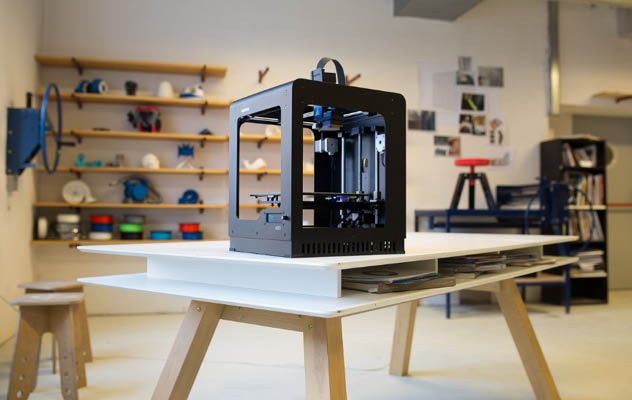
As the global economy continuously evolves, 3D-printers are becoming more interesting and common in schools around the globe. It operates in ways that extrudes molten plastic through a tiny nozzle that moves around a targeted area under computer-controlled precision (Woodford, 2020). In recent times, 3D-printers are integrated into classroom curricula to achieve positive effect on student critical skills development and to achieve greater student engagement (Zimmerman, 2018). As the 21st century learning skills emphasizes on creativity, critical thinking and technological skills etc., it becomes questionable in how beneficial 3D printers are to the educational classroom and to what extent does it involve student engagement.
With the growing importance of STEM subjects, 3D-printing has a greater impression upon schools across Australia. Teachers can utilize 3D-printers to bridge the gaps between learning styles of different students that enables the element of physical reality to otherwise abstract ideas (Hahn, 2017), which can enhance learning when ideas and concepts are presented in both concrete and abstract terms, through visual and physical forms (Hahn, 2017; Huebner, 2008).

Research shows that students involved in 3D-printing-based activities have developed 21st century skills including creativity, problem solving skills and critical thinking (Bower, Stevenson, Falloon, Forbes and Hatzigianni, 2018). This aligns with Bloom’s taxonomy which allows students to pursue creative thought/design (Yale, n.d.), further development of student teamwork skills, improved student participation, active learning, creative thinking and may potentially turn subjects into careers (Bower et al., 2018; Reid, 2018).
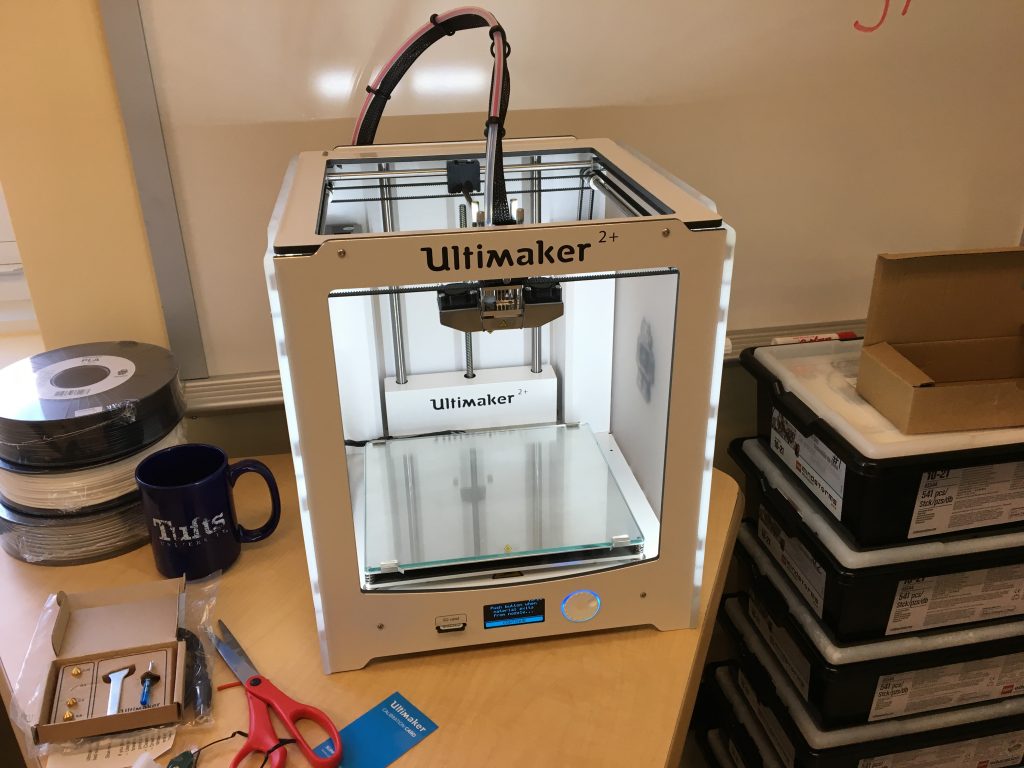
However, the upfront cost per 3D-printing unit averages around the $1000 AUD mark (however, inexpensive models do exist) which may be disconcerting to schools with limited budget access. Furthermore, difficulties in object calibration, teachers learning the programs professionally (Bower et al., 2018), application being distractions for students and literacy difficulties in younger students can hinder creative thinking progress. However simplified user interface can mitigate some difficulties. Furthermore, students can print out dangerous items; although preventable through software limitations. Further limitations includes malfunctioning, cost of accessories, maintenance and printing speed. However, it promotes problem solving and perseverance for teachers and students to diagnose and attempt to fix the problems (Bower et al., 2018).
3D-printing encourages students to be creative and innovative through trial and error. As such, it allows them to remember the facts and lessons learnt (Bower et al., 2018; Reid, 2018). 3D-printing enables students to foster and develop creative processes through the correct investment, motivation and engagement with the technology.
References:
Bower, M., Stevenson, M., Falloon, G., Forbes, A., Hatzigianni, M. (2018). Makerspaces in Primary School Settings – Advancing 21st Century and STEM capabilities using 3D Design and 3D Printing. Sydney, Australia: Macquarie University. Retrieved from: https://primarymakers.files.wordpress.com/2019/06/makerspaces-in-primary-school-settings-full-report-2018v2.pdf
Hahn, B. (2017, November 30). 3D Printing in Science Classrooms: Helping Students Visualise Scientific Concepts. Me3d. Retrieved from: https://me3d.com.au/2017/3d-printing-in-science-classrooms-helping-students-visualize-scientific-concepts/
Henderson, J. (2008). Developing Students’ Creative Skills for 21st Century Success. ASCD Education update. 50(12), Retrieved from: http://www.ascd.org/publications/newsletters/education-update/dec08/vol50/num12/Developing-Students’-Creative-Skills-for-21st-Century-Success.aspx
Hueber, T. (2008). What Research Says About … / Balancing the Concrete and the Abstract. Giving Students Ownership of Learning. Educational Leadership, 66(3), 86-87. Retrieved from: http://www.ascd.org/publications/educational-leadership.nov08/vol66/num03/Balancing-the-Concrete-and-the-Abstract.aspx
McConnell, J. (n.d.). 7 Benefits of using #d Printing Technology in Education. MakersEmpire. Retrieved from: https://www.makersempire.com/7-benefits-of-using-3d-printing-technology-in-education/
Reid, J. ( 2018, January 18). 4 benefits of 3D printings for Schools. The Educator Australia. Retrieved from: https://www.theeducatoronline.com/k12/technology/e-learning/4-benefits-of-3d-printing-for-schools/245670
Woodford, C. (2020, January 16). 3D Printers. Explainthatstuff!. Retrieved from: https://www.explainthatstuff.com/how-3d-printers-work.html
Yale, (n.d.). Using 3D Print Models in the Classroom. Retrieved from: https://poorvucenter.yale.edu/faculty-resources/instructional-tools/using-3d-print-models-classroom
Zimmerman, E. (2018, November 27). 3D Printing Highly Effective for Building Creative Skills in K-12 [#Infographic]. Edtech. Retrieved from: https://edtechmagazine.com/k12/article/2018/11/3d-printing-highly-effective-building-creative-skills-k-12-infographic
 EDUC3620 Digital Creativity and Learning - CW
I can see you have read a lot. I have learnt something from reading your blog, not only about 3D printers, but also how to structure a blog based on the requirements of Task 1.
I am not sure whether I am right or not, maybe a little bit practical example (for example, how to apply it into specific lessons) will enhance readers understanding, especially for those who has little experience about 3D printers.
LikeLike
I thought about doing a practical example, unfortunately due to the word limitations i’ve decided to remove it as I believed that the other segments would provide more information. Thank you for reading my blog.
LikeLike
Hey Casper,
This was a good balanced critique of 3D printers. However, I would have liked to see how you would link it to the curriculum, as I personally struggle to think of ways to implement this in a primary setting.
I think another point to mention, could be the role of teachers encouraging growth mindsets in students to foster an an environment for students to be creative (catalyst role). An example of this could be, the task requires students to first design 3 prototypes on paper before using the 3D printer. Students are encouraged to make mistakes as they save resources and materials of printing. With these boundaries in place, I can start to see how 3D printers could be realistically integrated into learning. I’d be interested to know how you would overcome the pedagogical implications you mentioned.
In theory a 3D printer is great however due to the cost and limited opportunities for collaboration. Perhaps a 3D pen could be a good alternative?
LikeLike
Hi Casper, nice discussion about 3d Printers here, I personally agree that the technology would be great for learning, as the physical printed items allow users to get a real hands experience with their creations. I think the tangibility of the creations will help to motivate students as they can clearly see and apply use with their creations in their own world which extends their learning. I’m curious to the expenditure of money with this technology too, you mentioned a cost of $1000 for using printer but it would be helpful to specify more detail (e.g. how long was printer used before reaching $1000 usage cost)
LikeLike
Interesting blog on how 3D printers are a modern and advanced phenomena in digital education and their necessity in student engagement and learning 21st century skills. I particularly like the fact that you argued that 3D printing has its positives being implemented in schools, through catering to different learning styles, increasing student engagement, providing future and current teachers the means of catering to these learning styles and the fact that you acknowledged that there are pitfalls and negatives in using this technology, such as placing a constraint on schools currently on a budget and the inappropriate ways students may use this technology. It was great to see an unbiased consolidation of perspectives and also how some negatives may be turned to positives through providing students and teachers opportunities to use their critical thinking to solve problems. It was great that you informed us on what research has found about the implications of incorporating this technology in schools. You could have also mentioned which KLAs or subjects this technology would be most useful and have the greatest implications for.
LikeLike
Hi Casper,
I appreciate your emphasising of the importance of skills in the STEM field for students in a modern workplace and explaining how 3D printers can help to develop those skills. Furthermore your views on the capacity for 3D printers to encourage children to use creativity, critcal thinking and problem solving show their worth in a classroom setting.
I think this post could be further improved by highlighting 3D printers suitability for inquiry based and project base learning experiences but your insights have definitely helped me understand the potential role of 3D printers in schools better than I have before.
LikeLike
Thank you Nathan. I agree, highlighting suitability for inquiry based and project base learning experiences would improve this post.
LikeLike
Hi Casper
I like how well rounded your reading was and it made for an interesting insight on how 3D-printers can be used in the school to develop 21st century thinking skills. You talk about the large range of skills that are developed through using this technology and how teamwork and problem solving can be used in the workforce. However, I would be interested on your insight on what key learning areas this technology can be best utilised. Your reading has led to deep understanding of how 3D-printers operate and work, but I would be interested in some tasks which promote creativity in the classroom (I know it is hard with the word count that we are working with).
Overall, this is a fantastic blog and I am looking forward to reading more content that you produce over the coming weeks.
Ben.
LikeLike