Casper Wang – 31/3/2020
In the last few years, robotics in education has slowly emerged in the form of a robotic model being behaviourally controlled by a virtual environment. However, the educational purpose and theories behind this robotics were limited to introductions to robotic technologies in STEM subjects and had minimal pedagogy support in such lessons (Alimisis, 2012).
Nowadays, robotics in education refers to a broader range of activities, programs, physical platforms and educational resources. Fundamentally, beneath the physical elements lies a pedagogical philosophy that matches the new ‘Digital Technologies’ curriculum. Furthermore, teaching robotics in schools can benefit a)student engagement and interests, b)students development of 21st century skills, c)inclusive activities suitable for students with different ranges of abilities, d)development of students’ critical and computational thinking skills and e)effective way of introducing programming to students. Most importantly, through the creation, design, assembly, and operation of robots, educational robotics can strengthen and support students’ skills in developing their knowledge (Innovative Tech, 2017).
However, for successful integration through a constructivist theoretical framework, teachers should undertake educational courses and training programs in robotics. Teachers without adequate training and knowledge will achieve minimal efficiency in integrating robotics in education as the role of the teacher is to organise, coordinate and facilitate learning for students. The teacher organises the learning environment, raises discourse, discreet assistance when necessary and encourages students to work “with creativity, imagination and independence and finally organises the evaluation of the activity in collaboration with students” (Alimisis, 2012).
Furthermore, educational robotic kits such as ‘Lego Mindstorm’ introduces hardware and software structure which allows users to develop programmable robots using Lego. Kits such as the Lego EV3 that we had to research, comes with countless differently types of sensors (e.g. motion, light, motor rotation etc.). Although it comes at a steep price around $500AUD, there are cheaper robotic kits available on the market such as ‘Bee-Bot’ ($89.95). However, the functions and sensors are more limited and less complex in terms of programming. Never-the-less, classroom activities can be done with different types of robots depending on the intended task. Through online archives, teachers and students can access large volumes of resources and designs for robotic based activities.
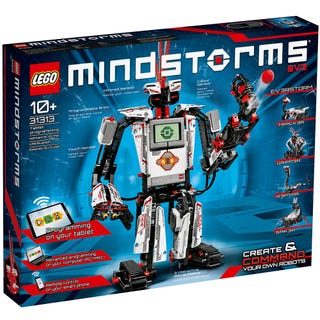

I personally believe robotics in education is vital for students in the 21st century. 21st century skills including foundational literacy, competencies and character qualities are all exhibited through robotics in education. It also prepares students for future employment.
References:
Alimisis, Dimitris (2012). Robotics in Education & Education in Robotics: Shifting Focus from Technology to Pedagogy. Robotics in Education Conference, 2012. Retrieved from https://pdfs.semanticscholar.org/be99/1d6cface636a180fa394ee621c2bb09df1e7.pdf
Innovative technologies, (24, October 2017). How Robotics Improves Education at School. Retrieved from https://eu-acerforeducation.acer.com/innovative-technologies/how-robotics-improves-education-at-school/
 EDUC3620 Digital Creativity and Learning - CW
Hi Casper
A very insightful and interesting blog on robotics and its benefits, conditions and constraints of being integrated into the classroom. I really like how you outlined the journey of how robotics had minimal pedagogical implications in the past and how now it is vital, in terms of facilitating students’ learning and acquiring 21st century skills. This informs us as teachers. that education and teaching is constantly changing and what may be of limited use now, may acquire more educational potential in the future. I also like how you emphasised that teachers need to undertake training programs and courses in using robotics to sufficiently integrate robotics in education, but a referenced study of this may have made this statement more persuasive. Ultimately i like how you emphasised differentiation, acquiring 21st century skills and facilitating students’ learning, as this clearly illustrates the benefits of integrating robotics into education and i also like how you mentioned that there are negatives such as robots being quite expensive and how you identified online archives as a potential solution.
Overall Great Blog! Enjoyed Reading!
LikeLike
Hi Casper,
Nice reading your blog. I’m curious on your opinion of the project that Lego provides as I am in two minds. Sometimes I think they are a great starting point for students to gain inspiration for how things can be assembled… and then sometimes I feel like the fact that they are predesigned to achieve one outcome is limiting student creativity. Thoughts?
Miss Wilkes.
LikeLike
My thoughts is that since Lego already provides predesigns, it does not stop the users from designing something different. Like any other Lego sets, there is always instructions in building something given, yet doesn’t limit anyone from building something completely different. As you stated, it is a great starting point for students to gain inspiration for how things can be assembled. There are countless 3rd party components can be purchased and used within the Lego mindstorm set to build something else. However, that’s extra costs and may not be cheap. I believe that student creativity is what limits their design, predesigns should act as a catalyst which promotes creativity and not limit creativity.
LikeLike
Hi Casper,
That’s really interesting, thank you for your perspective. It sounds like you are quite familiar with Lego robotics! From what I’ve seen, students are able to get straight into creating their own robotics with the Lego Mindstorms kits. I always assumed they’d need the kits to get started, but I’m yet to find evidence of this. Have you? Would you start out with a kit or just immediately let them begin on their own?
Regards,
Miss Wilkes
LikeLike