27/04/2020
Virtual Reality is a trending and immersive technology based upon the user interaction and immersion into a digital world. Typically, VR immersion involves user adorning a pair of VR ‘goggles’ to view the virtual world in three dimension; as if the user has just entered a new world. Furthermore, VR also allows user control and interaction in the new world. In education, VR is slowly being adopted into classroom environments. VR comes in many different styles; simple VR headsets can be built using a mobile device and simple cardboard cut-out pieces while more sophisticated VR models incorporated motion control and hand controllers.
Virtual reality has brought major changes into the educative process. Learners will now learn through simulations as opposed printed textbook content. Furthermore, curriculum materials are no longer predominantly text-based, but imagery and symbol-based (Helsel, 1992). VR offers to move student learning from its “reliance on textbook abstractions to experiential learning in naturalistic settings” (Helsel, 1992). Critically, this grasps student engagement, involvement and develops student learning skills through critical thinking and development of the digital language when solving problems.
One such VR application that we used was called “CoSpaces”. It allows the construction of 3D environments through simple ‘drag and drop’ of objects or through more sophisticated coding processes. It can be accessible through PC or mobile devices. Furthermore, the application can be explored immersivity through the VR interaction. From an educative perspective, CoSpaces can be used by teachers to construct an interactive immersive world where students can explore. These worlds can be designed in ways where students can explore locations or scenarios which are less accessible/impossible in the real world. Students themselves can design assignments and activities around CoSpaces to present their information or presentations etc.


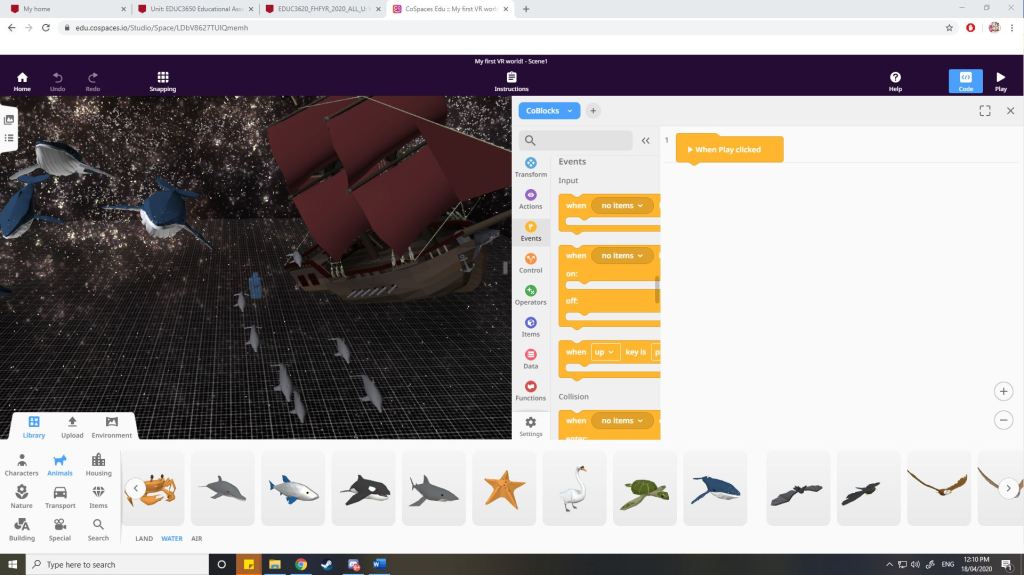
Image 2 Middle: User tool palette that allows users to insert objects and content into their 3D virtual world.
Image 3 Right: Coding aspect of the CoSpaces interface should users choose to code their 3D virtual world.
However, it should be noted that the effectiveness of VR in education depends on the professional skills of teacher utilising them and the learning responsibilities of students. VR itself may distract students from learning tasks and further considerations include as ethical, developmental, cognitive etc. Also, the pricing of VR can vary from depending the accessories, it varies from around $300 (Oculus Go) or less to up and including $2599 (HTC VIVE PRO EYE full kit). Never-the-less, VR can offer new pedagogical affordances and uses for the educational classroom, it provides educational qualities that are essential for the 21st century digital learning and for students.

References:
Helsel, S. (1992). Virtual Reality and Education. Educational Technology, 32(5), 38-42. Retrieved April 27, 2020, from http://www.jstor.org/stable/44425644
 EDUC3620 Digital Creativity and Learning - CW
Hi Casper. Thanks for writing an excellent post on the use of virtual reality in education. I particularly enjoyed reading about your point with regards to the considerations of VR technology adoption within the classroom. You’ve mentioned the price barrier, the dependence on teachers to utilise the VR headsets effectively, and also stated other issues. I’d like to add that student safety is also a small consideration, as students are essentially blind to their real environments when using VR, and care must be taken to avoid students hurting themselves or others around them. You’ve highlighted CoSpaces as a way of making virtual worlds, and I’m keen on learning more. Thanks for suggesting this.
LikeLike
Hey Casper, thank you for writing a blog based on the immerse and interaction of students involved with Virtual Reality (VR). Learners that adapt to virtual worlds that integrate textbook abstractions and critical learning in the virtual world. Helsel suggestion of VR being in the naturalistic setting allows teachers to easily observe students progression in the classroom. However, the limitation of costly eye equipment and use of the equipment within primary schools can alter the effectiveness of educational qualities in twenty-first century learning.
LikeLike