Casper Wang – 44637586 – 8/5/2020
As modern technology is constantly evolving, so is the direction of the digital world. Nowadays, modern schools are pushing more and more technology based learning as the Australian curriculum requires students to develop Information and Communication Technology (ICT) capability as they also learn to use ICT effectively and appropriately to access, create and communicate information, develop problem solving and collaborative abilities in learning (Australian curriculum, 2020). Digital games and design can be created and interacted with in Virtual Reality, Augmented Reality or just simply on computers.
Digital games and designs can introduce the sense of responsibilities, peer collaboration, as well as learning new skills. Research has shown that students involved in game learning curriculum based activities such as ‘Scratch’ have learnt to practice safe security with personal data, developed classroom collaboration in sharing ideas and media information and developing new digital literacy skills (Costa, Tyner, Henriques & Sousa, 2017).
In my experience, games can be complicated and explicit designs or simple and user friendly, such as Scratch. Scratch is a block-based visual programming language and website mainly targeted at younger students (K-6). Scratch allows the users to create games and ideas using simplified coding blocks. Users can publish their finished designs freely online where other users can open and interact with, allowing people to explore different levels of creativity and ideas.

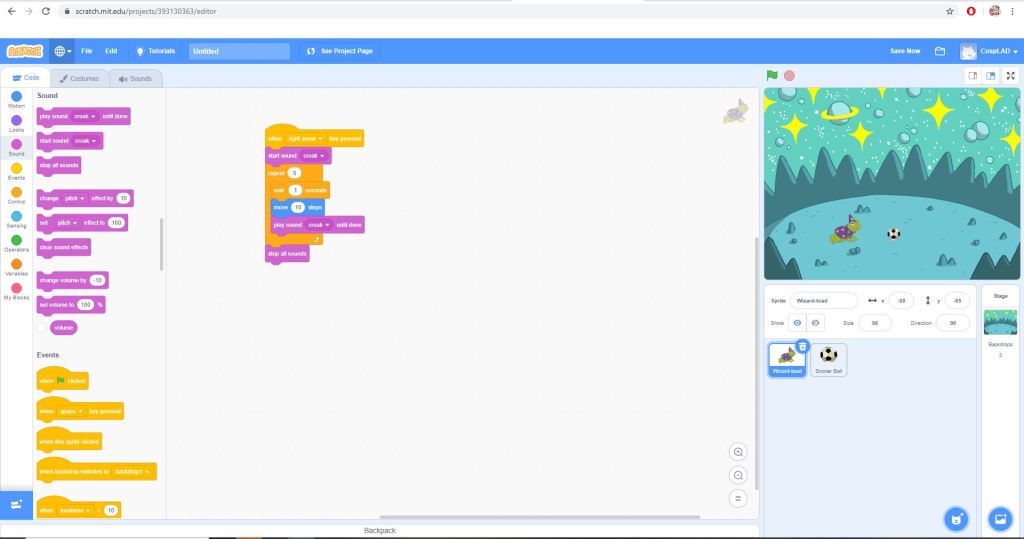

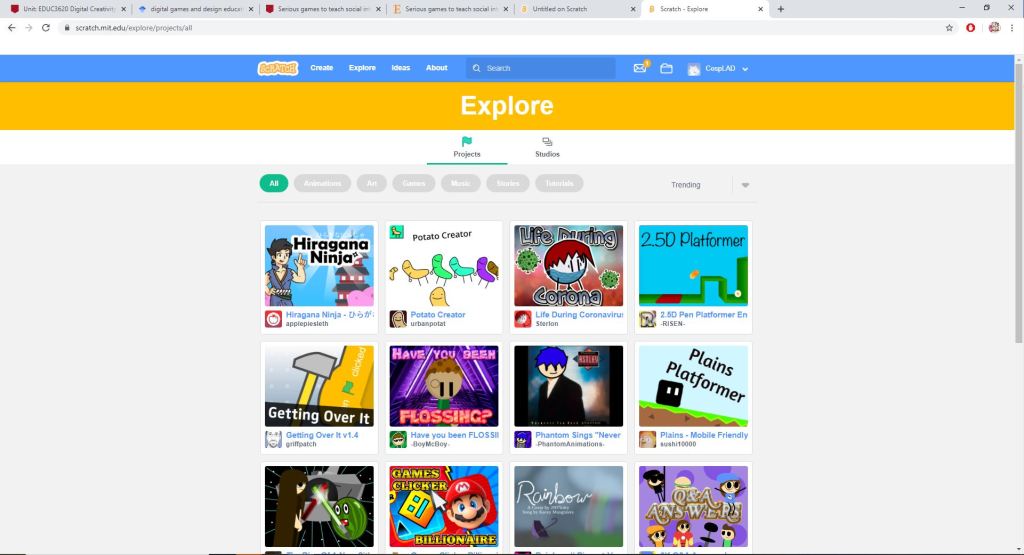
Image 2 Top Middle: Building blocks are stacked and linked to create a function/purpose
Image 3 Top Right: Audio can also be added the coding blocks.
Image 4 Bottom: Scratch as a diverse online community that share their projects. Many users can easily browse to find different ideas and concepts
However, I don’t see the usage of Scratch beyond primary education. In a pedagogical sense, Digital games and designs can promote learning and critical development of creativity and higher order thinking. However, this requires professional learning by teachers in understanding the ICT language and how the software works to prevent interference with pedagogical planning. Furthermore, students may become distracted by digital games and focus less attention on the tasks, which can detrimentally lead ineffective teaching and learning; where learning is primary and entertainment is mostly secondary (Plaisent, Tomiuk, Perez, Mokeddem & Bernard, 2019).
Nevertheless, research studies have shown that video games can yield experience on cognitive functions, including a positive correlation between task performance during probabilistic categorisation learning and positive effects on memory systems (Schenk, Lech & Suchan, 2017). Games in educational context can become unreplaceable assets in modern education, students can develop critical learning, higher order thinking skills/problem solving skills and most importantly, creative skills.
Reference
Australian Curriculum, Assessment and Reporting Authority (ACARA). 2020.
Costa, C., Tyner, K., Henriques, S., & Sousa, C. (2017). Digital Game Creation for Media and Information Literacy Development in Children. European Conference on Games Based Learning, 112-121.
Plaisent, M., Tomiuk, D., Perez, L., Mokeddem, A., & Bernard, P. (2019). Serious Games for Learning with Digital Technologies. Retrieved from https://www.researchgate.net/profile/Lucila_Perez/publication/336882144_Serious_Games_for_Learning_with_Digital_Technologies/links/5db8c8fc4585151435d1698b/Serious-Games-for-Learning-with-Digital-Technologies.pdf
Schenk, S., Lech, R., & Suchan, B. (2017). Games people play: How video games improve probabilistic learning. Behavioural Brain Research, 335, 208-214.
 EDUC3620 Digital Creativity and Learning - CW
Hi Casper,
You raise some interesting points in this post. I would agree that with educational video games, you leave yourself open to students becoming easily distracted, which can defeat the whole purpose of using them for educational purposes. I also agree that Scratch is a bit limited when using it for secondary students. It would have been interesting if you had posed an alternative that would be suitable for secondary school. Overall though, this was an informative post.
Josh
LikeLike
Hi Casper,
Great blog! I enjoyed reading your critique on Games based learning. I think it was good that you mentioned why you think Scratch is appropriate for K-6 students, rather than 7-12.and your reasons for this. I also think it was great you included a TED talk about the effectiveness of games being integrated into the classroom.
Lily.
LikeLike
Hi Casper,
I thought that you raised some good points on Games-Based Learning and using Scratch in the classroom.
I do agree with you that Scratch is more appropriate for a K-6 Classroom compared to a 7-12 Classroom and thought that your discussion on the reasons for this was very well thought out.
Corey
LikeLike
Hi Casper,
Great blog post on games and education. I really liked how you looked at students creating games using scratch, rather than integrating off the shelf games into the classroom. Interesting take on Scratch being less useful as students get older, is there another alternative that would be better suited for secondary students?
Jack
LikeLike
There aren’t too many games suitable for secondary students. Unless you factor into extensive coding and students building their own games from scratch using coding softwares. Otherwise most of the games on the market are currently aimed towards the younger ages, up to and including at best year 9-10 students.
LikeLike